
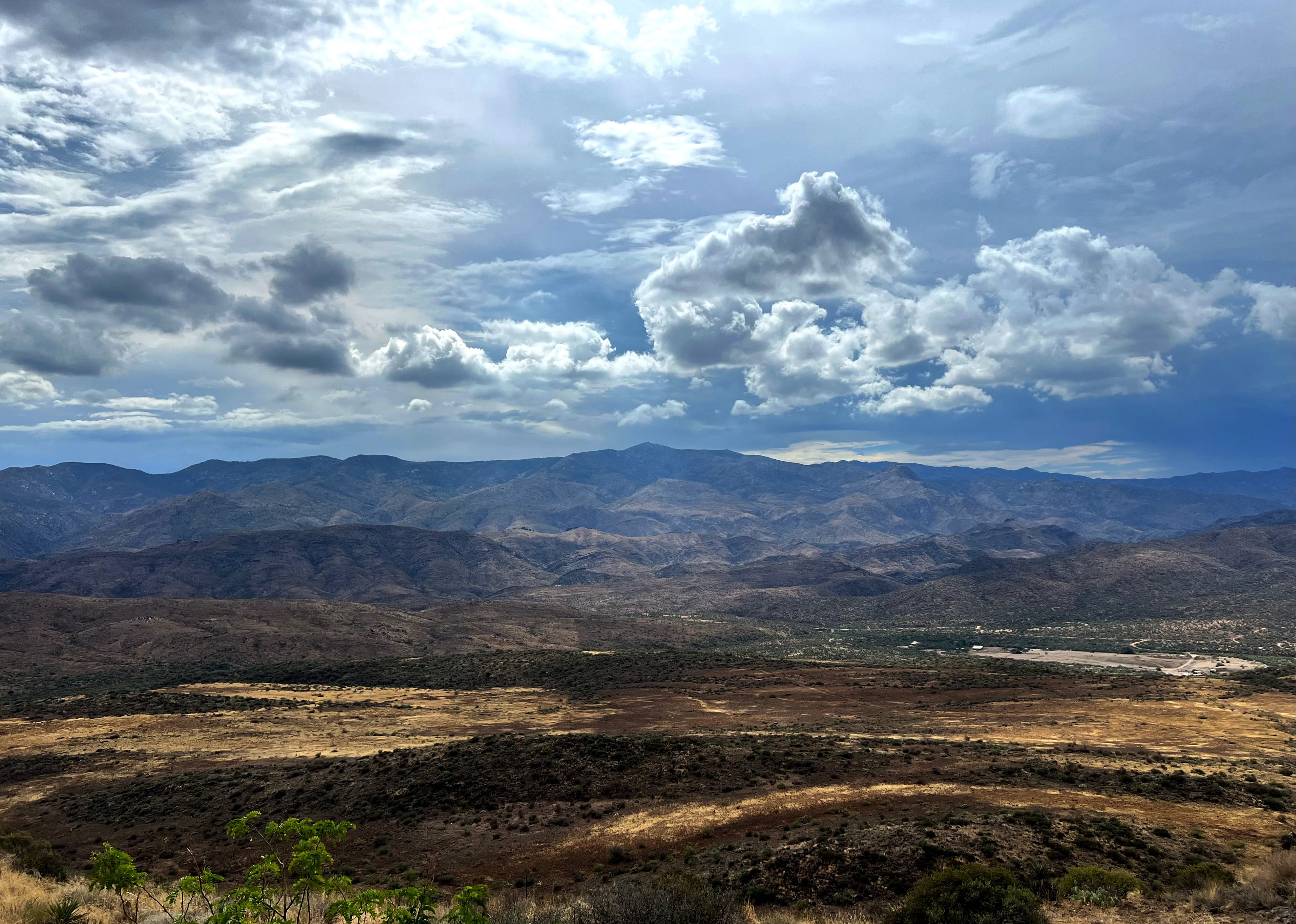
My homeland is a plain yet vexing land - spartan at best, occasionally sublime, and simply punishing at worst.
My dad was born in what is now Poland and grew up in the Rhine valley of West Germany. He grew up as a boy in Köln and apprenticed as a pastry chef in Düsseldorf. When he was 21, he caught “wanderlust” and decided to leave his home and country. The United States of 1965 was my dad’s preferred destination, but he felt his English was inadequate. However, my dad apparently felt his French was passable, so he emigrated to Montreal and got work there at a hotel restaurant. Eventually, he made his way over into the Rocky Mountain regions of Canada working in the burgeoning ski industry and improving his English.
I sometimes joke about how much some Germans love “Native American” culture and point out that I am, from a very logical perspective, the practical end of that “love” (at least in the case of my father). My dad became quite good friends with the Blackfoot Confederacy tribes in the Calgary area and was likely inclined to settle down there, but then, by chance, my dad made contact with my mom as a pen pal.
My dad had sent letters inquiring about various tribes in North America. His tactic for the U.S. was to send letters to Bureau of Indian Affairs’ Agency Superintendents requesting information of the local tribes they served. He sent a letter to the Salt River Agency, and the superintendent passed the letter on to my mom who was working there as a 19 year-old secretary to help her mom and family as her dad, my grandfather, had passed away just over a year prior. My mom responded in writing to my dad on behalf of the BIA and the Salt River tribe, and a relationship began.
In 1968, my mom and dad were married in Sacaton, Arizona on the Gila River Indian Reservation. In 1971, their oldest child (me) was born. My only other sibling, my brother, was born in 1973. We all initially lived in my grandfather’s childhood adobe in Salt River, but eventually moved to the Gila River reservation to be closer to my grandmother and young aunts.
My dad loved his wife and immediate and extended American family, but he was not as fond of the harsh climate of the Salt and Gila River valleys of the Sonoran Desert. Simply put, it was just too damn hot for him sometimes. Hell, I grew up here, and it’s too damn hot for me - every single year - but we deal with it.
Arizona is a blessed state in that one can find every climatic zone here. In a matter of hours, one can travel from the hot, low desert to the forgivingly cooler (maybe 40 to 50 degrees cooler) mountains. Unfortunately, work for a pastry chef, specifically with ski resort experience, was not abundant in southern Arizona in the 1970’s, so an extra, available vehicle for family excursions to the north was not realistic, and escapes out of the heat were not as common as I’m sure my dad would have liked.
Still, my mom and especially my dad made every effort to ensure at least an annual trip to the Grand Canyon in the summer. We would take the same route up to Flagstaff, get hamburgers at Bun Huggers, drive up Humphreys Street to Route 180, pass (PASS - always to the chagrin of my brother and me) by Bedrock City, then camp outside Tusayan for a night or two.
My grandmother was a registered nurse, trained by the Native American nurse instruction program developed in Ganado, Arizona during World War II. Her usual employment was at the Arizona State Prison in Florence - only about 30 minutes from Sacaton. Around the time I was six, however, my grandmother was offered a position at the hospital in Prescott. It was not as high in elevation as Flagstaff, but it was still much cooler than the southern deserts.
My grandma was also my parents’ “go to” babysitter for my brother and me, so my brother and I got to travel to Prescott relatively frequently to stay with my grandmother on weekends and the occasional school break. (I lost my first tooth watching “The Little Drummer Boy” at my grandma’s house in Prescott during Christmas Vacation.)
On all these trips north, whether it was with my parents or with my grandmother, we would always travel through or get back onto the I-17 at Cordes Junction on the southern return home. Sunset Point is a relatively historic rest stop on the routes connecting Phoenix and points south with points north and sits just above the Black Canyon and the desert Saguaros. My dad liked to stop there to get one last breath of cool(ish) air before braving the heat again, and my grandmother just liked to ensure my brother and I got a relatively relaxed bathroom break before she had to confront the often overheated craziness of Phoenix traffic.
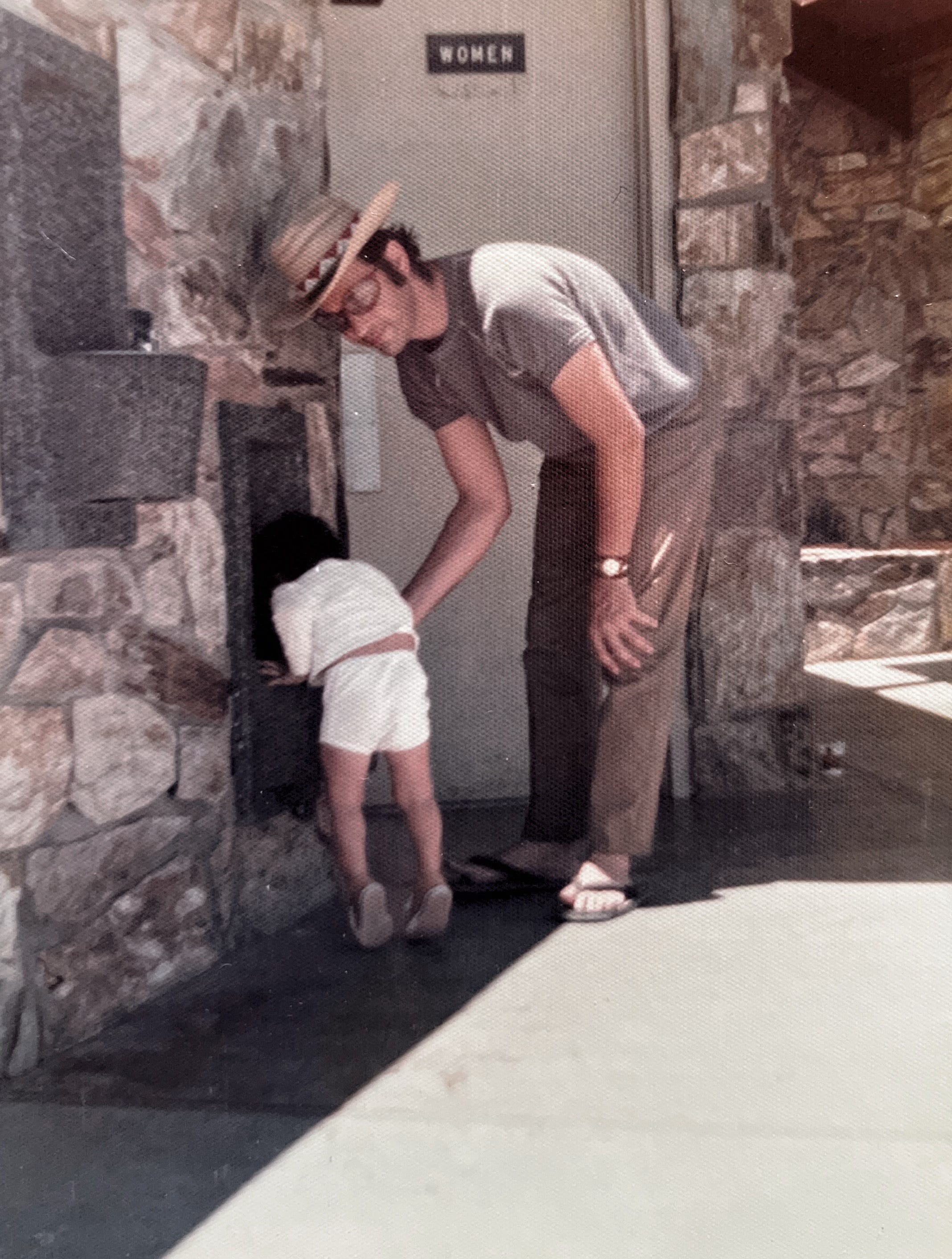
(That’s my dad and me at Sunset Point in the early summer of 1976.)
I grew up with evaporative (“swamp”) cooling in our houses, and that type of cooling is only really effective until the higher humidity of July and August monsoons arrive. Nowadays, I would die without central air conditioning.
Yesterday, I participated in an electric vehicle “Ride and Drive” in Flagstaff. My wife has had recent, significant losses in her family, and my son prefers the air conditioned comfort of “Admin Abuse” in his Roblox game at our home over sitting in a car for hours traveling to and from Flagstaff and then being bored while I let strangers drive my car. Consequently, I made yesterday’s trip by myself.
The event was basically a bust as we got absolutely drenched with rain and even, at one point, had to shelter in place in our rubber tire insulated vehicles due to the threat of lightning strikes, but it was a good reunion of fine and fun folks - and we got pizza!
The idea of Flagstaff rather than the Phoenix metro area in mid-July sounded like a great idea when we developed it, and though things did not turn out exactly as intended, the experience was still enjoyable and even renewing. The summer rains mark the beginning of the O’odham New Year, and the Hopi’s see those annual rains the same way.
A few weeks after the summer solstice, the Hopi believe the Kachinas return home to the 12,000 foot San Francisco Peaks next to modern Flagstaff where they will stay until the winter solstice. As part of their return home, the Kachinas bless us all with life-giving rains. I should have remembered that when the date for our event was originally proposed as it fell almost exactly within that timeframe of likely Kachina rain.
Because I brought neither a jacket nor an umbrella, I was soaked at times, but it was cleansing and rejuvenating. The summer baptism and the fellowship of friends produced peace and joy. I felt no disappointment from anyone.
Most of my fellows had made arrangements to spend the night before and the night after our event in the cool, forested relief of Flagstaff. As my family remained home, I had opted to make it a day trip. I bid farewell to my friends, charged my car at Rivian charger at Bashas’ (where I also unexpectedly, and gratefully, found a raven’s primary wing feather fall right before me), and made the run downhill back to the desert.
I stopped for a burger at “Junk Food Junction” in Camp Verde and was finished eating by the time I approached the Sunset Point rest area. My old bladder and my desire to dispose of the lingering scent of fry grease as best I could led me to make a stop that I haven’t made in a long time.
It was later in the afternoon, and the clouds between the higher and lower elevations were mingling and breaking as the sun was on its daily descent. The air was markedly cool from what turned out to be statewide rains and, along with my mind, clear and clean. I recalled my parents and grandparents and their love and comfort and care. As I sat back in my car, I saw a young family park and break out of their van. Two young boys led the charge out of containment and ran to the scenic ledge overlooking the Bumblebee area and, more distantly, the gold-bearing Bradshaw Mountains that really catalyzed the settlement of Europeans in Arizona.
I traveled on home - happy and content. It was another day of blessings.