
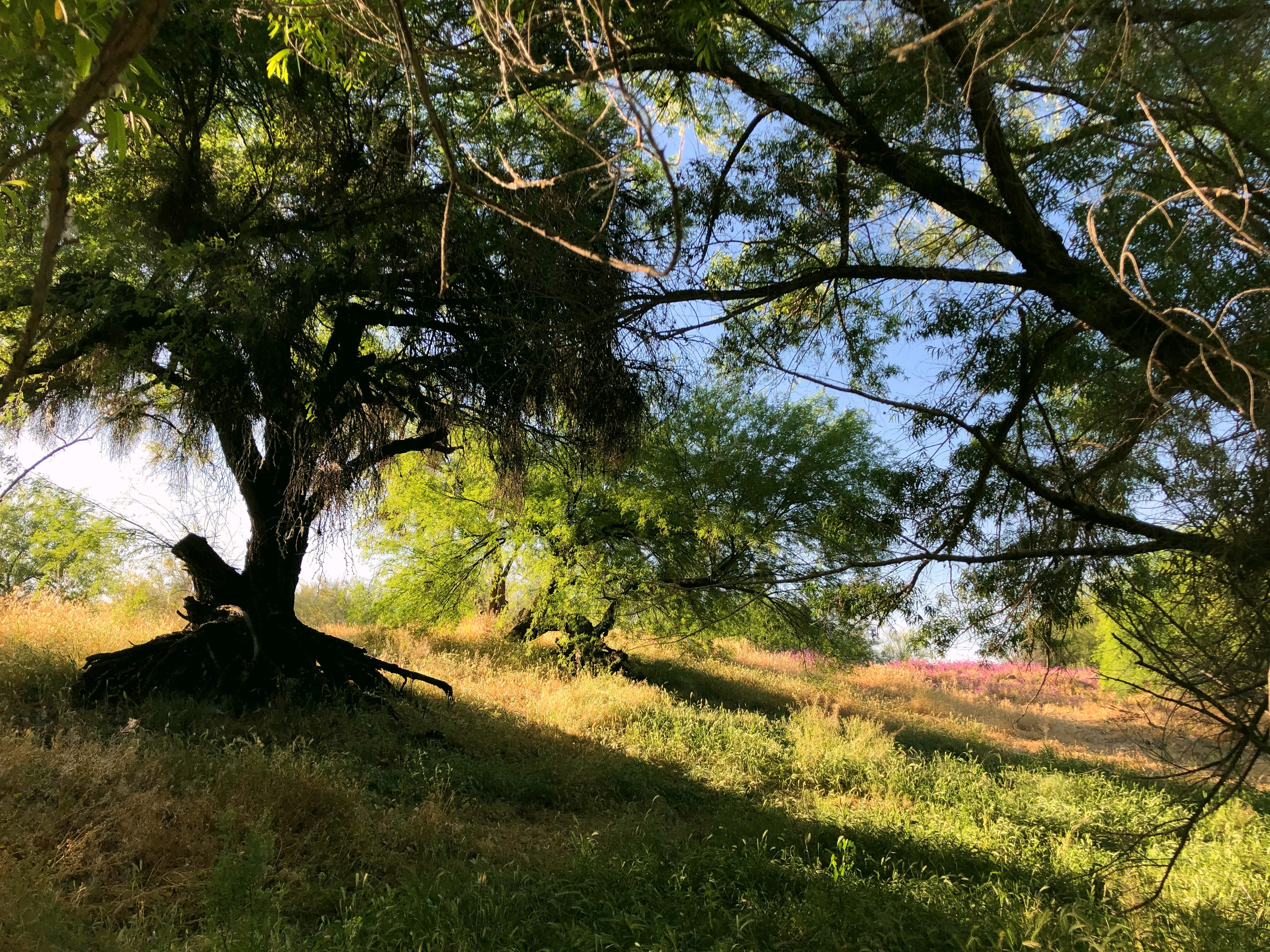
The O’odham name for June is Hașañ Baidag Mașad - Saguaro Fruit Month.
There were generally 13 “months” in the year traditionally - aligning with the lunar cycle, but the annual calendar was generously flexible, and months were general periods rather than defined collections of specific days. Also, the annual calendar was “reset” every year with dramatic rise in temperatures, the desiccation and lost color of the spring flowers and grasses, the ripening of the Saguaro Fruit, and finally, the arrival of the sometimes violent and frightening yet critical and life-sustaining summer rains that return this time of year. The O’odham “New Year” happens in June.
Within my family, however, June has also become a month of commemorating births and, sadly, deaths. My dad was born the day before D-Day in Gdansk, Poland (then called Danzig in Nazi Germany), my wife has a birthday, and my mother-in-law and one of my sisters-in-law have birthdays. However, my dad also passed away in June of 2013, my aunt, my mom’s sister - and for whom I was a caregiver - passed away in June as well (she was actually taken off life support on the fourth of June but held on until just past midnight of June fifth - I’m fairly certain just to make one final gesture to her brother-in-law, my dad, with whom she never really got along), and now my father-in-law, five times married and father to eight children, one of whom is my beloved wife, will be remembered for his departure in June.
June can be a simply hard month in O’odham Jeved - the Sonoran Desert. Water becomes more scarce, crops collected from the prior year are low, edible plants are dying, and temperatures can soar to genuinely debilitating highs, but the same hot temperatures also create a change in wind patterns and foster a sort of vacuum to funnel atmospheric moisture from the oceans into the desert.
The local flora have adapted to the weather patterns, and the O’odham developed certain crops out of rougher, naturally occurring plants. The most significant staple of the traditional O’odham diet is the Tepary Bean - a “superfood” high in protein, low on the glycemic index, extremely nutritious, and existent in various shapes and sizes - though all descended from the original “Coyote” bean (called that because when gathered, the original beans were “tricky”, like Coyote, and were in size and appearance almost identical to the tiny desert pebbles, just slightly larger than grains of sand - if one dropped those seeds and tried to pick them up to cook, one might as well stew a pot of desert soil - something Coyote would undoubtedly laugh at). The quick growing Tepary Beans naturally germinated with the annual arrival of the summer rains, so O’odham would plant their fields with their developed strains of the beans at that same time every year.
The desert also provides a high-sugar, sweet treat with cactus fruit. Many of the smaller species of cactus have fruit that ripens a little earlier in the year, but the slow-growing, deliberate Saguaro possesses fruit that does not fully ripen until right around the Summer Solstice and, maybe coincidentally, maybe not, with the return of the summer monsoons.
Now, just as a quick aside, the common belief is that alcohol consumption did not exist in the Americas until after the arrival of the Europeans, but it’s been proven that a few cultural groups developed alcoholic beverages in the “New World” centuries ago. The O’odham were one. We took the acidic, high-sugar fruit of the Saguaro and utilized it - for etching jewelry, to make jams and dried snacks, but also to create a (foul-tasting, to be quite honest) wine to get “beautifully drunk”. To become intoxicated from Saguaro fruit wine was ceremonial with the intent being to get drunk enough to vomit and bring moisture to the earth - all to invite, welcome, and celebrate the summer rains that refresh the rivers and foster the growth of food.

This June, I was asked to prepare and read the eulogy at my father-in-law’s funeral. I relished the gathering of daughters and sisters prior to the funeral to try and recollect what they could of their loved one’s life. I learned new things about the man I had known for nearly a third of my life - like the fact that his legs were consistently voted as the “sexiest” on the Salt River Rez during the 1970’s (no doubt one of the reasons he was married five times), and I was able to, I hope, condense and share the breadth of a life well lived. Wrapping up the eulogy, though, I recalled my personal experience of going back to my father-in-law’s room just a minute or so after he passed. I did not realize, or even really anticipate, he had left, but as I approached, I knew, without word, that he had. It was a mournful moment, but it was also one of the most beautiful sights I have ever felt and seen.
My father-in-law had six daughters, a couple additional, adopted daughters, and numerous granddaughters and great-granddaughters. In his final moments, he was surrounded by the pure love filling his room from eight of his daughters and granddaughters. There were some tears but no noise, no wailing, no tragic confusing chatter - only peaceful acceptance of the passing moment. As I told those gathered at the funeral, may we all be so lucky to leave this world with such love and calm and comfort.
As I write this, another of my wife’s relatives, one of her aunts (her mom’s sister) is in intensive care at a nearby hospital, and we may very well be confronted with yet another memorial date in June, but I am strangely (or not) rejuvenated.
As the heat, and seeming threat, of June intensified, in my youth, I used to gird myself to simply endure. As I’ve matured, I’ve had to directly face and deal with difficult circumstances - physically, psychologically, rationally, and emotionally - that had to be actively dealt with to fulfill my obligations. I have been tested, and I have learned. Life may be difficult, even ended here and now, in the harsh time of the Saguaro fruit, but when all seems just about to end, we are reminded, and we witness, that life is not a finite affair; the extent of life goes beyond our comprehension AND moves cyclically, and all is ultimately and inevitably renewed and reborn.
Beautiful, Hans! I spent time among the saguaro on my last trip out West, and I enjoyed hearing what this season means to you.