
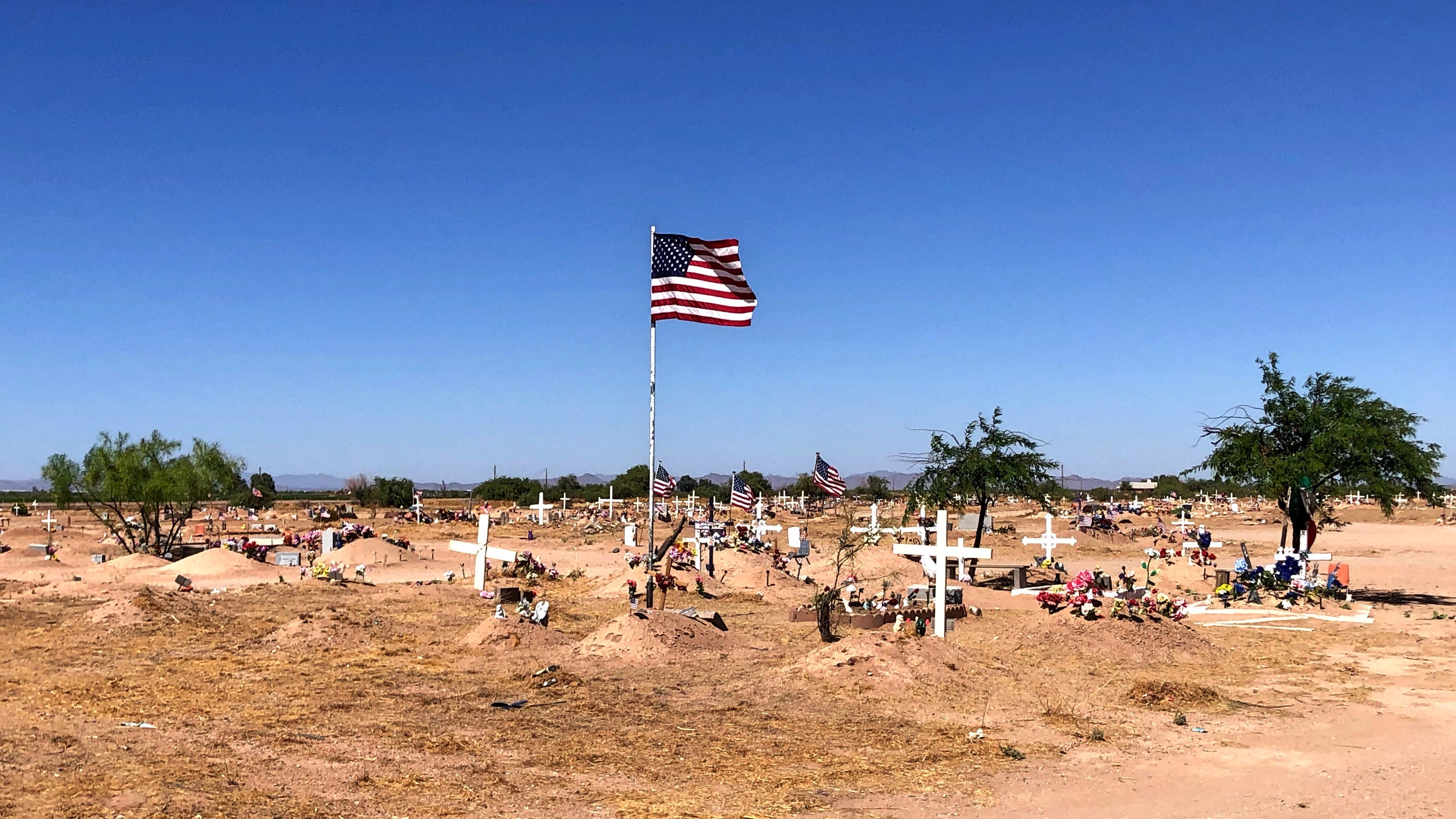
When I started considering writing here, it was for three reasons. Firstly, I’ve always simply enjoyed writing. Secondly, I feel my experience as person with a German immigrant father, a Native American mother, and a life growing up on Native American reservations (along with the occasional residence in New England) during that distinctive transitional period from the “analog” post-Boomer 60’s into the modern, wholly digital “Age of Information” might be interesting to some. Finally, having embraced the pursuit and retention of knowledge of my family’s and tribe’s histories, and as my son is the heir to a shrunken and depleted kinship group, I was compelled to record thoughts and events for the sake of sharing what fewer and fewer now remember.
My son is, technically, my legally “adopted” son, but he is my son in every way that truly matters, and though we are adamantly bonded by love, we are, ultimately, also related by “blood”. My son’s biological grandmother is my first cousin; the common ancestor my son and I share is his great, great grandfather and my grandfather. Memorial Day, and its connection to the genuine patriotism, more often than not, practiced by the members of our military, invoked thought of my grandfather (who I, sadly, never met in this life), so I felt it appropriate to write today.
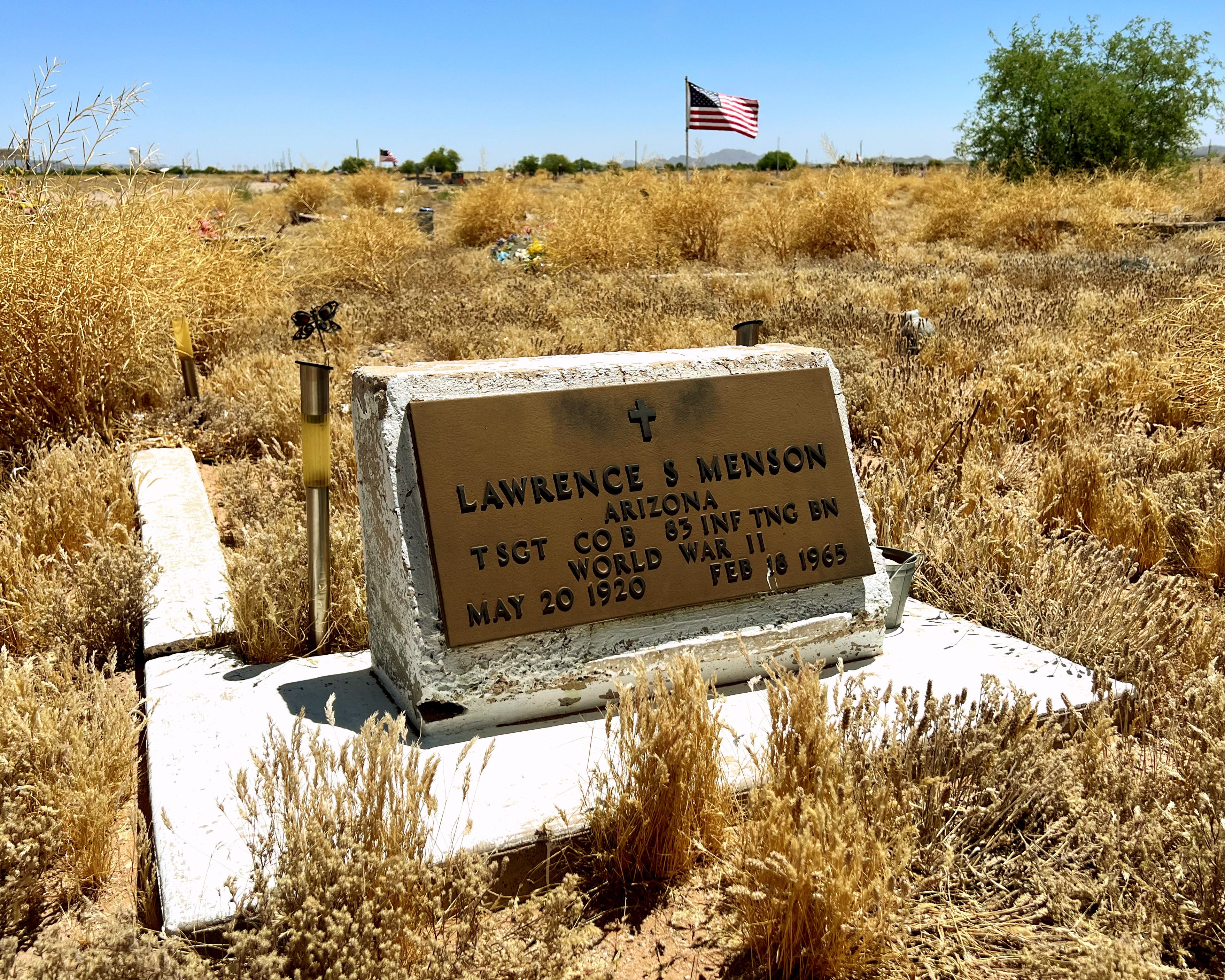
My grandfather was Lawrence Menson. Lawrence was Akimel O’odham from the Salt River Pima-Maricopa Indian Community and married my grandmother, Dorothy Walker Menson (also Akimel O’odham but from the Gila River Indian Community), just after returning from World War II. I always like to point out that my grandfather and all of his cousins, brothers, and brothers-in-law fought in a war for a country that, while recognizing their citizenship, did NOT recognize their ability to vote for democratic representation (as the state of Arizona, for a time, successfully argued that residents of Native American reservations did not legally reside within the electoral jurisdiction of the state). My grandfather was an engineer - which was impressive considering how few men, let alone Native American men, earned that degree back then, but the United States census always listed him as a “farmer” for his vocation - as the census did for all O’odham men at that time, and by all accounts, he was a fun-loving and responsible family man. My grandfather served on the Salt River tribal council briefly before agreeing to move his young family to live on his wife’s Gila River reservation.
Lawrence, like his wife’s cousin Ira Hayes, fought in the Pacific Theater. Like Ira Hayes, as well, my grandfather was able to fortunately survive a war that killed so many and return home to start and, by all meaningful measures, raise a close and loving family. However, as a likely consequence of his time in combat, my grandfather developed blood clots that unknowingly dwelled in his body until he was 44 when they unleashed their fatal power on him. Lawrence died three years before my parents got married and six years before I was born. Still, in my daily recognition of those ancestors I knew in my life but are now gone, I do still remember my maternal grandfather as the love and care he showed to those who, in turn, loved and cared for me was profound and indelible.
There was only ever one photo of my grandfather, and I did see it everyday I was in my grandmother’s house in Sacaton, Arizona, but it was lost when my aunts and uncles moved out of my grandmother’s house and the domicile was consequently demolished by the Gila River tribal government before anyone was able to recover the remaining personal items inside. (There is MUCH more to this moment in my family history - effects of elements of grief and laziness, of new wealth, and of obsessive, compulsive disorders - but those details can be shared at another time.) Strangely, there is a photo wherein that photo is actually in the background, but one would need “Bladerunner” levels of technology we don’t have to recreate the original photo to a level even moderately approaching what it was. That same “picture of a picture” of my grandfather, funnily, is also intimately connected to my son.
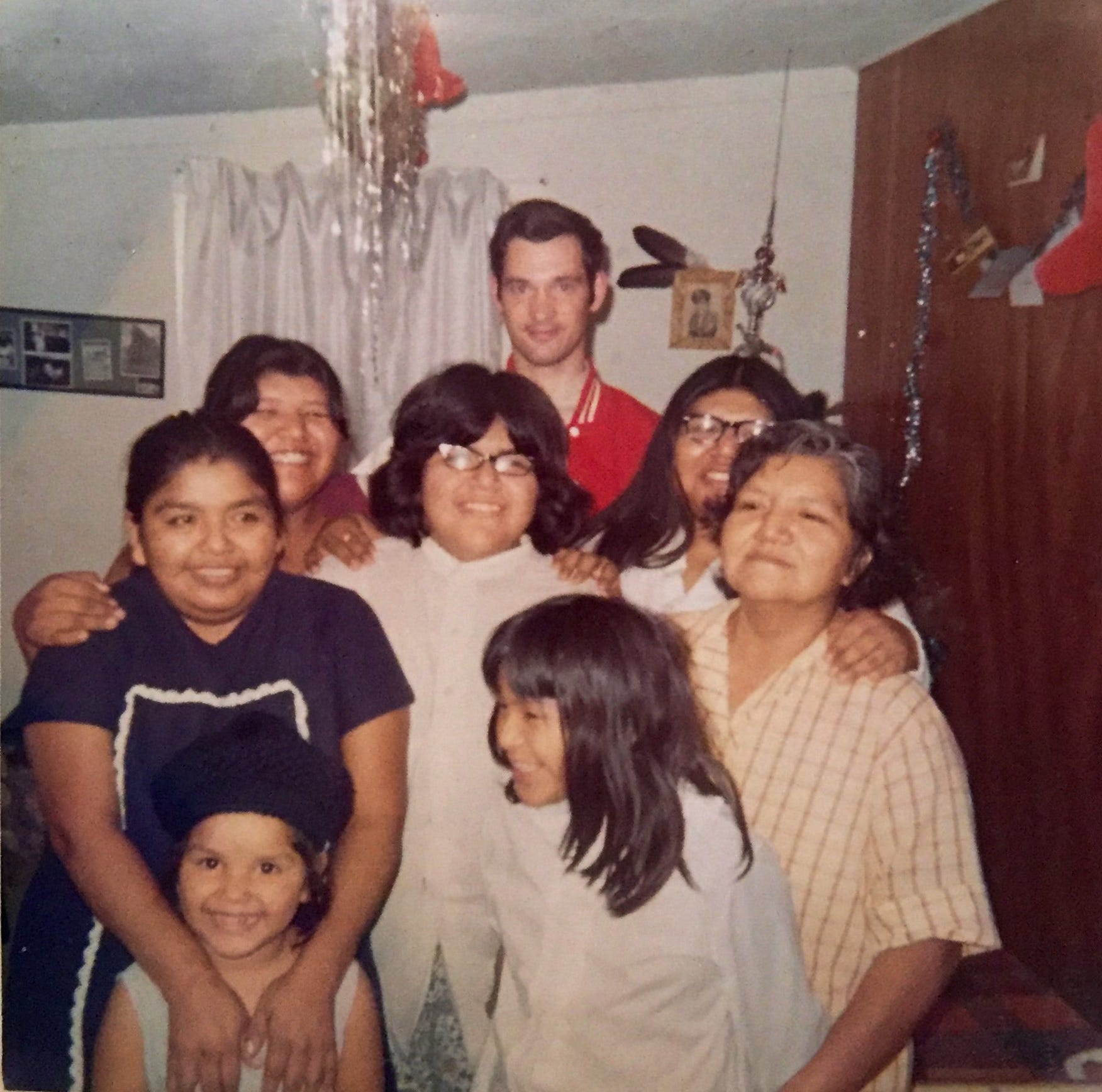
My mom (upper left) and her new husband, my dad, gathered with her sisters Janice (right), Margo (middle), and Toni (center left), two of Toni’s daughters, five-year old Michelle and eight-year old Laurie, and her mother, my grandmother, in 1968 to take a snapshot in front of the modest Christmas Tree in my grandma’s house in Sacaton, Arizona. In the background, on the wall, one can see the photo of my grandfather on the wall. I can feel the happiness in the moment, and also because there were so few photos of my family taken and even fewer that have survived, I sincerely enjoy looking at the photo. As mentioned before, Laurie is my son’s biological grandmother, and Toni is his biological great-grandmother - I appreciate that fact, but it was my wife that noticed the prevalence of women in the photo (I grew up in a home dominated by women, so I never thought anything of that plain fact). My wife also recognized the strong family connection to our son; specifically, my wife could absolutely sense the strength and on-going protection of the women pictured over our boy. At first, I did not ascribe much to my wife’s sentiment, but following gentle reflection, I understood fully her feeling, and it made my heart glad.
My son has a family history, and I endeavor to ensure he knows it.